65% of Greeks want hens across the European Union to be out of cages by 2035, while only 11% would accept hens remaining in cages until 2045 or later. The findings come from a new Savanta poll conducted across 25 EU countries, involving approximately 25,000 citizens.
Across the EU, 75% of citizens support getting hens out of cages by 2035. In fact, the most common individual response in all 25 countries was that this should already have happened. In Greece, 36% of respondents expressed this view.
The findings come five years after the European Commission committed, on 30 June 2021, to propose legislation to gradually phase out and ultimately prohibit the use of cages, following the “End the Cage Age” European Citizens’ Initiative, which was supported by almost 1.4 million citizens. The original deadline, the end of 2023, passed without a proposal being tabled. The Commission has now committed to presenting a proposal concerning laying hens by the end of 2026.
At the same time, an analysis of meetings held by Commissioners Christophe Hansen and Olivér Várhelyi and their cabinets recorded at least 46 meetings with representatives of the meat, poultry and dairy industries on animal welfare issues, compared with just seven meetings with animal protection organisations during the period examined.
Olga Kikou, Deputy Representative of the “End the Cage Age” European Citizens’ Initiative, said:
“The message from citizens is clear: three in four Europeans want hens out of cages by 2035. Only 7 in 100 are willing to wait until 2045 or later. For five years, the European Commission has delayed delivering on its commitment, while industry interests continue to influence the debate. Citizens have spoken. The Commission must now move from promises to action and table the legislative proposal on time.”
Across the EU, 75% of citizens support getting hens out of cages by 2035. In fact, the most common individual response in all 25 countries was that this should already have happened. In Greece, 36% of respondents expressed this view.
The findings come five years after the European Commission committed, on 30 June 2021, to propose legislation to gradually phase out and ultimately prohibit the use of cages, following the “End the Cage Age” European Citizens’ Initiative, which was supported by almost 1.4 million citizens. The original deadline, the end of 2023, passed without a proposal being tabled. The Commission has now committed to presenting a proposal concerning laying hens by the end of 2026.
At the same time, an analysis of meetings held by Commissioners Christophe Hansen and Olivér Várhelyi and their cabinets recorded at least 46 meetings with representatives of the meat, poultry and dairy industries on animal welfare issues, compared with just seven meetings with animal protection organisations during the period examined.
Olga Kikou, Deputy Representative of the “End the Cage Age” European Citizens’ Initiative, said:
“The message from citizens is clear: three in four Europeans want hens out of cages by 2035. Only 7 in 100 are willing to wait until 2045 or later. For five years, the European Commission has delayed delivering on its commitment, while industry interests continue to influence the debate. Citizens have spoken. The Commission must now move from promises to action and table the legislative proposal on time.”
More than 140 million hens are still kept in cages
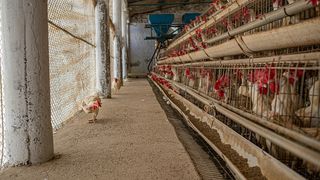
More than 140 million hens in the EU, over one third of the total, are still kept in cages, with each bird having less usable space than an A4 sheet of paper.
COPA-COGECA, the European organisation representing farmers and agricultural cooperatives, is calling for a transition period of at least 15 years. A study commissioned by the organisation examines a scenario in which cages remain in use until 1 January 2045, while estimating that an immediate transition to cage-free systems would reduce egg-sector profits by just 0.9%.
In Greece, AB Vassilopoulos has already moved to selling eggs from hens that are not kept in cages. However, many eggs from caged hens are used in processed foods and in the food-service sector, where consumers are often unable to know the conditions in which the hens were kept.
Legally phasing out cages is essential to protect all hens, regardless of where their eggs ultimately end up. The European Commission must honour its commitment so that, by 2035, the last hen in the EU is out of a cage.
COPA-COGECA, the European organisation representing farmers and agricultural cooperatives, is calling for a transition period of at least 15 years. A study commissioned by the organisation examines a scenario in which cages remain in use until 1 January 2045, while estimating that an immediate transition to cage-free systems would reduce egg-sector profits by just 0.9%.
In Greece, AB Vassilopoulos has already moved to selling eggs from hens that are not kept in cages. However, many eggs from caged hens are used in processed foods and in the food-service sector, where consumers are often unable to know the conditions in which the hens were kept.
Legally phasing out cages is essential to protect all hens, regardless of where their eggs ultimately end up. The European Commission must honour its commitment so that, by 2035, the last hen in the EU is out of a cage.
Information
1. The poll. Savanta conducted fieldwork from 11 to 29 September 2026 across 26 EU Member States. In each country, an online questionnaire was completed by approximately 1,000 adults aged 18 and over, recruited through Savanta’s partner panels. Samples were designed to be nationally representative, with quotas for gender, age and type of area of residence. Data were weighted by gender, age and type of area of residence so that each national sample reflected the country’s adult population.
Cyprus was not included in the survey. In Malta, the number of completed interviews was insufficient for reliable analysis, so Malta was excluded from the published results, which cover 25 countries. Savanta is a member of the Market Research Society (MRS) and the British Polling Council (BPC) and adheres to their standards.
The research was conducted by Savanta, commissioned by Humánny pokrok on behalf of the animal protection organisations publishing the findings. EU-wide figures are weighted according to the adult population aged 18 and over in each country, based on Eurostat population data as of 1 January 2025, so that each country is represented proportionally to its adult population. Malta is excluded.
Phrases such as “in all 25 countries” refer to simple country counts. The question published today was: “When do you think the last hen should be out of the last cage in the EU?” Response options were: It should have happened already / By 2030 / By 2035 / By 2040 / By 2045 / 2050 or later / Never / Don’t know.
The question was asked following a neutral introduction and before any reference to the Commission, its commitment or any interest group. The first question in the survey, concerning support for or opposition to ending the use of cages, is not being published: checks of individual responses indicated that a substantial proportion of the sample had interpreted the response options as referring to cages rather than to ending their use, and Savanta’s review reached the same conclusion.
“By 2035” in this press release combines the first three response options. “2045 or later” combines the final three substantive response options. Percentages based on the total sample include the 16% who answered “don’t know”; figures excluding “don’t know” responses do not. The margin of error for a national sample of approximately 1,000 respondents is around ±3 percentage points at the 95% confidence level. It is higher for subgroups. Full data tables are available upon request.
2. The commitment. European Commission Communication C(2021) 4747 final of 30 June 2021, responding to the “End the Cage Age” European Citizens’ Initiative, committed to “put forward, by the end of 2023, a legislative proposal to phase out, and finally prohibit, the use of cages”. The ECI received 1,397,113 validated signatures and reached the minimum threshold in 18 Member States. The 2023 deadline passed without a proposal. The EU livestock strategy of 7 July 2026 states the Commission’s intention to propose a targeted revision concerning hens by the end of 2026.
3. The meetings. An Animal Equality analysis of the European Commission Transparency Register covering Commissioners Várhelyi and Hansen and their cabinets, from mid-December 2024 to 11 March 2026, identified at least 46 declared meetings with bodies representing the livestock industry, including meat, poultry and dairy, on animal welfare issues, compared with seven meetings with animal protection organisations.
4. The industry’s own documents. A COPA-COGECA submission to the Commission’s call for evidence on the revision of EU animal welfare legislation, dated 16 July 2025, calls for “a long transition (over at least 15 years)”. An impact assessment commissioned by COPA-COGECA examines a scenario in which cages remain in use until 1 January 2045. An immediate transition is modelled as reducing egg-sector profits by 0.9%.
5. Science and public opinion. The 2023 Special Eurobarometer 533 found that nine in ten people in the EU consider it important that farmed animals are not kept in individual cages. Excluding “don’t know” responses, the latest finding shows that nine in ten want the last hen in the EU to be out of cages by 2035. A European Commission public consultation on the welfare of animals on farms received more than 190,000 valid responses, with 99% of participating citizens considering ending cages for hens important or very important.
6. Full breakdown of responses and progress of the transition. Across the EU, population-weighted figures for the full sample were: should have happened already 52%; by 2030 18%; by 2035 6%; by 2040 2%; by 2045 1%; 2050 or later, or never 6%; don’t know 16%. By 2035: 75%, or 89% excluding “don’t know” responses. 2045 or later: 7%, or 8% excluding “don’t know”.
In 2025, 64.3% of the EU’s 401.1 million hens were housed in cage-free systems, leaving more than 140 million in cages. Austria, Luxembourg and Germany have legally prohibited cages. In Germany, the EU’s largest egg market, the ban took effect on 1 January 2026. The Czech Republic (2027), Wallonia in Belgium (2028), Slovenia (2029) and Denmark (2035) have bans scheduled to take effect later. Sweden’s egg industry transitioned to cage-free production in 2025 without a legal ban.
7. National results – Greece (sample of 1,000 respondents). 36% say the last hen in the EU should already have been removed from cages; 65% want the last hen in the EU to be out of cages by 2035, rising to 80% when “don’t know” responses are excluded; 11% would accept cages remaining until 2045 or later; and 19% answered “don’t know”. In Greece, 25.7% of hens are kept in cage-free systems, according to 2025 data from the competent Ministry.
Cyprus was not included in the survey. In Malta, the number of completed interviews was insufficient for reliable analysis, so Malta was excluded from the published results, which cover 25 countries. Savanta is a member of the Market Research Society (MRS) and the British Polling Council (BPC) and adheres to their standards.
The research was conducted by Savanta, commissioned by Humánny pokrok on behalf of the animal protection organisations publishing the findings. EU-wide figures are weighted according to the adult population aged 18 and over in each country, based on Eurostat population data as of 1 January 2025, so that each country is represented proportionally to its adult population. Malta is excluded.
Phrases such as “in all 25 countries” refer to simple country counts. The question published today was: “When do you think the last hen should be out of the last cage in the EU?” Response options were: It should have happened already / By 2030 / By 2035 / By 2040 / By 2045 / 2050 or later / Never / Don’t know.
The question was asked following a neutral introduction and before any reference to the Commission, its commitment or any interest group. The first question in the survey, concerning support for or opposition to ending the use of cages, is not being published: checks of individual responses indicated that a substantial proportion of the sample had interpreted the response options as referring to cages rather than to ending their use, and Savanta’s review reached the same conclusion.
“By 2035” in this press release combines the first three response options. “2045 or later” combines the final three substantive response options. Percentages based on the total sample include the 16% who answered “don’t know”; figures excluding “don’t know” responses do not. The margin of error for a national sample of approximately 1,000 respondents is around ±3 percentage points at the 95% confidence level. It is higher for subgroups. Full data tables are available upon request.
2. The commitment. European Commission Communication C(2021) 4747 final of 30 June 2021, responding to the “End the Cage Age” European Citizens’ Initiative, committed to “put forward, by the end of 2023, a legislative proposal to phase out, and finally prohibit, the use of cages”. The ECI received 1,397,113 validated signatures and reached the minimum threshold in 18 Member States. The 2023 deadline passed without a proposal. The EU livestock strategy of 7 July 2026 states the Commission’s intention to propose a targeted revision concerning hens by the end of 2026.
3. The meetings. An Animal Equality analysis of the European Commission Transparency Register covering Commissioners Várhelyi and Hansen and their cabinets, from mid-December 2024 to 11 March 2026, identified at least 46 declared meetings with bodies representing the livestock industry, including meat, poultry and dairy, on animal welfare issues, compared with seven meetings with animal protection organisations.
4. The industry’s own documents. A COPA-COGECA submission to the Commission’s call for evidence on the revision of EU animal welfare legislation, dated 16 July 2025, calls for “a long transition (over at least 15 years)”. An impact assessment commissioned by COPA-COGECA examines a scenario in which cages remain in use until 1 January 2045. An immediate transition is modelled as reducing egg-sector profits by 0.9%.
5. Science and public opinion. The 2023 Special Eurobarometer 533 found that nine in ten people in the EU consider it important that farmed animals are not kept in individual cages. Excluding “don’t know” responses, the latest finding shows that nine in ten want the last hen in the EU to be out of cages by 2035. A European Commission public consultation on the welfare of animals on farms received more than 190,000 valid responses, with 99% of participating citizens considering ending cages for hens important or very important.
6. Full breakdown of responses and progress of the transition. Across the EU, population-weighted figures for the full sample were: should have happened already 52%; by 2030 18%; by 2035 6%; by 2040 2%; by 2045 1%; 2050 or later, or never 6%; don’t know 16%. By 2035: 75%, or 89% excluding “don’t know” responses. 2045 or later: 7%, or 8% excluding “don’t know”.
In 2025, 64.3% of the EU’s 401.1 million hens were housed in cage-free systems, leaving more than 140 million in cages. Austria, Luxembourg and Germany have legally prohibited cages. In Germany, the EU’s largest egg market, the ban took effect on 1 January 2026. The Czech Republic (2027), Wallonia in Belgium (2028), Slovenia (2029) and Denmark (2035) have bans scheduled to take effect later. Sweden’s egg industry transitioned to cage-free production in 2025 without a legal ban.
7. National results – Greece (sample of 1,000 respondents). 36% say the last hen in the EU should already have been removed from cages; 65% want the last hen in the EU to be out of cages by 2035, rising to 80% when “don’t know” responses are excluded; 11% would accept cages remaining until 2045 or later; and 19% answered “don’t know”. In Greece, 25.7% of hens are kept in cage-free systems, according to 2025 data from the competent Ministry.