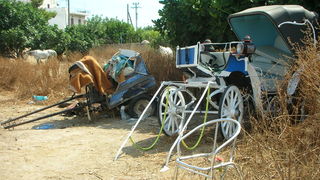
In recent years, the use of equids pulling carriages has remained a complex and often problematic issue, particularly in tourist areas. The lack of uniform rules, insufficient oversight, and the absence of meaningful requirements have resulted in animals being exposed to conditions that did not ensure their welfare.
The nonprofit organization A Promise to Animals and the Panhellenic Equine Protection Association Hippothesis have long and consistently highlighted these problems. Through engagement with the Ministry, submission of proposals, and public interventions, our aim has been the establishment of a clear and binding framework that protects equids and puts an end to arbitrariness.
The recent decision by the Minister of Interior represents a substantive step in this direction. For the first time, carriage operation permits are issued for a specific duration and are non transferable. Mandatory inspections are introduced by Municipal Police, Traffic Police, and Veterinary Services, along with a unified licensing fee and the obligation for municipalities to designate parking and waiting areas.
At the same time, critical provisions for equine welfare are introduced. Electronic identification becomes mandatory, age limits are set, the declaration of suitable stabling facilities is required, and work in extreme temperatures is prohibited. Of particular importance is the exclusion from licensing of individuals who have been convicted or are under prosecution for animal abuse, as well as the mandatory insurance of the vehicles. All these rules, conditions, and requirements must now be met and enforced by municipalities, which are responsible for issuing the permits.
This decision does not mark the end of the road. It does not address all systemic shortcomings, and its effectiveness will depend on implementation and enforcement in practice. However, it is a very positive starting point and a clear signal that animal protection can and must be integrated into public policy.
We acknowledge the importance of the Ministry’s initiative and the willingness to cooperate that has been shown. On our part, we expect the immediate and full compliance of all involved with the new regulations, and we will continue to monitor their implementation, submit proposals for improvement, and advocate for a framework that genuinely ensures respect for and the welfare of equids.