The discussion within the European Commission about the future of fur farming has reached a critical point, as internal disagreements intensify regarding the response to the European Citizens’ Initiative calling for a complete ban on fur.
More than 1.5 million EU citizens signed in favor of banning fur animal farming and the sale of farmed fur products on the European market. The Commission is required to present its position by the end of March.
According to Politico, the debate is focused on two directions. One foresees the gradual phase-out of fur farming at the EU level. The other limits itself to tightening animal welfare standards, without imposing a full ban.
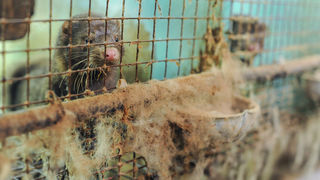
A decisive role in the discussion is played by the scientific opinion of the European Food Safety Authority. In the summer of 2025, the Authority concluded that the small cages used in the farming of mink, foxes, and raccoon dogs cause serious and systematic animal welfare problems. It further noted that these problems cannot be substantially addressed without a radical change to the farming system. At the political level, pressure is increasing. Austria has officially requested clarification from the Commission regarding its intentions, arguing that a complete ban would provide greater legal certainty and facilitate fair compensation for producers exiting the sector.
Following Poland’s decision at the end of 2025 to ban fur farming, with a transitional period until 2034, only five EU countries have not announced plans for a phase-out: Finland, Denmark, Spain, Hungary, and Greece. The upcoming decision of the European Commission is expected to determine the regulatory framework for the future of fur in Europe and to directly affect countries with significant production, such as Greece.
More than 1.5 million EU citizens signed in favor of banning fur animal farming and the sale of farmed fur products on the European market. The Commission is required to present its position by the end of March.
According to Politico, the debate is focused on two directions. One foresees the gradual phase-out of fur farming at the EU level. The other limits itself to tightening animal welfare standards, without imposing a full ban.
A decisive role in the discussion is played by the scientific opinion of the European Food Safety Authority. In the summer of 2025, the Authority concluded that the small cages used in the farming of mink, foxes, and raccoon dogs cause serious and systematic animal welfare problems. It further noted that these problems cannot be substantially addressed without a radical change to the farming system. At the political level, pressure is increasing. Austria has officially requested clarification from the Commission regarding its intentions, arguing that a complete ban would provide greater legal certainty and facilitate fair compensation for producers exiting the sector.
Following Poland’s decision at the end of 2025 to ban fur farming, with a transitional period until 2034, only five EU countries have not announced plans for a phase-out: Finland, Denmark, Spain, Hungary, and Greece. The upcoming decision of the European Commission is expected to determine the regulatory framework for the future of fur in Europe and to directly affect countries with significant production, such as Greece.